Source Wear Resistant Excavator Tool Bushing for Excavators, Cranes, and Diggers
Compare 30 listings for wear resistant excavator tool bushing from verified Chinese manufacturers. Options include flange, sleeve, and spiral oil channel designs with ISO 9001:2015 certification and customizable dimensions for heavy machinery applications.
Key considerations
Products List




Comprehensive Sourcing Guide
Strategic Sourcing Guide for Wear Resistant Excavator Tool Bushings
Understanding the Technical Specifications of Excavator Bushings
When sourcing wear-resistant excavator tool bushings, buyers must first establish a precise understanding of the technical attributes that define product performance in heavy-duty environments. The core component in this category is the bushing sleeve, often designed as a hardened steel sleeve specifically for excavator arm pins. These components are critical for maintaining the structural integrity of the linkage between the boom, stick, and bucket, ensuring smooth articulation under extreme load conditions. The primary material composition observed in high-quality units is steel, with specific grades such as GCr15 or 40Cr frequently cited for their balance of toughness and hardness. The hardness range for these hardened steel sleeves typically falls between 52 and 60 HRC, a specification that directly correlates with the component's ability to resist abrasion and deformation during operation.
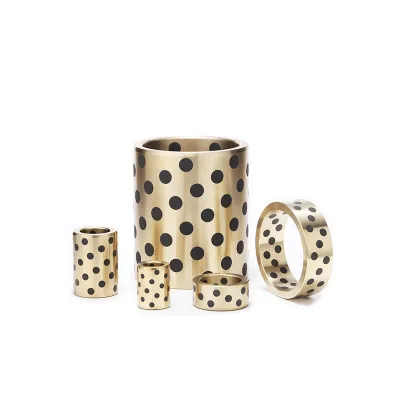
The geometry of the bushing is equally critical. While standard sizes exist, the market offers a significant volume of customized bushing shapes to fit specific machinery models. The product shape can be tailored, and dimensions such as height and width are often optional to accommodate unique OEM requirements. Lubrication channels are a defining feature of these components, designed to retain grease or oil within the pivot points. The observed specifications include spiral oil channels, cross grooves, and ring patterns, which facilitate the distribution of lubricants to reduce friction and heat generation. The surface treatment processes applied to these steel components are vital for corrosion resistance. Common treatments include phosphating black finishes and heat treatment processes, which enhance the surface hardness and durability against environmental elements.
Compliance, Certification, and Standard Verification
In the global procurement of industrial machinery parts, verifying compliance with international standards and certifications is a non-negotiable step. Buyers should prioritize suppliers who can demonstrate adherence to recognized quality management systems. The ISO 9001:2015 certification is a prominent standard observed in this sector, indicating that the manufacturer maintains a robust quality management system. Additionally, specific product standards such as DIN1494 may be referenced for certain bushing types, providing a baseline for dimensional and material consistency. However, it is important to note that many suppliers operate on a "customized" standard basis, where the final product specifications are confirmed against the buyer's approved drawings rather than a rigid pre-existing catalog standard.
Certification verification extends beyond the manufacturing process to the final product delivery. Buyers should request documentation confirming that the materials used, such as the steel grades mentioned, meet the required chemical and mechanical properties. While some suppliers may claim compliance with broader safety standards like CE, the primary focus for bushings should remain on the ISO 9001:2015 certification and the specific material certifications provided by the steel mill. It is essential to treat certification claims as observations that require validation through official documentation rather than assuming every listed product satisfies every certification without proof. The origin of the product, often cited as China, implies a specific supply chain dynamic where buyers must ensure that the export documentation aligns with the stated certifications.
Cost Drivers and Pricing Dynamics in the Market
The pricing structure for wear-resistant excavator bushings is influenced by a complex interplay of material costs, manufacturing complexity, and order volume. The observed price range in the market is broad, spanning from 0.01 to 3000 USD, which reflects the diversity of product sizes, material grades, and customization levels. A single standard bushing may be priced at the lower end of this spectrum, while a large, custom-machined sleeve with complex oil channels and specialized heat treatment will command a premium. The material cost is a primary driver, with the use of high-grade steels like 40Cr or GCr15 inherently increasing the base cost compared to lower-grade alternatives.
Manufacturing processes also significantly impact the final price. Products requiring CNC machining, forging, or casting involve higher labor and equipment costs compared to standard stamping or simple turning operations. The level of customization is another major factor; "customized" products often carry a higher unit price due to the setup time and engineering effort required to produce non-standard dimensions. Furthermore, the minimum order quantity (MOQ) plays a crucial role in unit pricing. While some suppliers may offer an MOQ as low as 1 piece for prototyping, the standard MOQ for production runs is often around 10 pieces or higher. Bulk orders typically yield better unit economics, but the total cost must be weighed against the inventory holding costs and the specific needs of the procurement cycle. Buyers should analyze the total cost of ownership, including shipping and potential downtime costs, rather than focusing solely on the unit price.
Typical Applications and Operational Environments
Wear-resistant excavator bushings are engineered for demanding applications where reliability is paramount. The primary application is within the hydraulic excavator, specifically in the linkage systems of the boom, arm, and bucket. These components are subjected to repetitive high-stress cycles, shock loads, and abrasive contact with soil, rock, and debris. The "Universal" designation often found in product descriptions suggests that certain bushing designs are compatible with a wide range of excavator models, reducing the need for model-specific inventory. However, the specific application also extends to other heavy machinery, including cranes, where similar pivot points require durable bushings to maintain operational efficiency.
The operational environment dictates the specific features required in the bushing. In mining or construction sites with high abrasion, the wear resistance feature becomes the most critical attribute. The hardened surface and the inclusion of oil grooves are designed to mitigate the effects of abrasive wear and ensure that the lubricant remains effective even in dirty conditions. The product shape, whether flange, washer, or sliding plate, is selected based on the specific mounting requirements of the machinery. For instance, flange bushings provide a larger surface area for load distribution, which is beneficial in high-load applications. Understanding the specific operational context of the end-user is essential for selecting the correct bushing type, as a standard bushing may fail prematurely if it lacks the necessary hardness or lubrication channels for the specific duty cycle.
Supplier Evaluation and Selection Criteria
Evaluating potential suppliers for excavator bushings requires a rigorous assessment of their manufacturing capabilities and quality assurance processes. Buyers should look for evidence of advanced processing methods, such as CNC machining and heat treatment, which are indicative of a supplier's ability to produce high-precision components. The presence of "CNC processing" and "heat treatment" in the supplier's profile suggests a commitment to maintaining tight tolerances and achieving the desired hardness levels. Additionally, the supplier's ability to offer customization is a key differentiator. Suppliers that provide "customized" solutions and accept "confirmed drawings" demonstrate the flexibility required to meet unique client specifications.
Quality assurance is another critical pillar of supplier evaluation. Buyers should verify that the supplier has a "Quality: Guaranteed" stance, backed by their ISO 9001:2015 certification. The packaging methods used by the supplier, such as anti-rust paper, cartons, wood cases, or pallets, are also indicative of their attention to detail and concern for product integrity during transit. A supplier that invests in proper packaging is less likely to deliver damaged goods, which is crucial for maintaining the quality of the bushings. Furthermore, the supplier's location, often China, should be considered in the context of logistics and lead times. While the location itself does not determine quality, it influences the supply chain dynamics, and buyers should ensure that the supplier has a track record of reliable delivery and communication.
Quality Control and Long-Term Procurement Considerations
Implementing a robust quality control (QC) strategy is essential for mitigating risks associated with the procurement of wear-resistant bushings. Given the critical nature of these components in heavy machinery, buyers should establish clear acceptance criteria based on the observed specifications, such as the 52-60 HRC hardness range and the specific surface treatment requirements. Regular inspections should be conducted to verify that the material composition, such as the use of GCr15 or 40Cr steel, matches the agreed-upon standards. The presence of oil grooves, whether spiral, cross, or ring, should be verified to ensure proper lubrication flow.
Long-term procurement considerations involve building a sustainable relationship with suppliers who can consistently deliver high-quality products. This includes negotiating favorable terms for repeat orders, establishing clear communication channels for technical queries, and ensuring that the supplier can scale production to meet fluctuating demand. The "Customization: Available" attribute suggests that buyers should maintain a collaborative relationship with the supplier to refine product designs over time, potentially leading to improved performance and cost efficiency. Additionally, buyers should consider the total cost of ownership, including the frequency of replacement and the impact of bushing failure on machinery downtime. By focusing on quality and reliability, buyers can minimize the risk of premature failure and ensure the long-term operational efficiency of their excavator fleets.
Comparative Analysis of Bushing Types and Features
To facilitate informed decision-making, buyers should compare the different types of bushings available in the market. The following table outlines the key variations in bushing types, features, and applications based on the observed product data.
| Feature Category | Flange Bushing | Sleeve/Washer | Sliding Plate | Spiral Oil Channel |
|---|---|---|---|---|
| Primary Application | High-load pivot points | General linkage | Specific sliding mechanisms | Lubrication retention |
| Material Grade | Steel (GCr15/40Cr) | Steel | Steel | Steel |
| Hardness Range | 52-60 HRC | 52-60 HRC | 52-60 HRC | 52-60 HRC |
| Surface Treatment | Phosphating Black | Heat Treatment | Heat Treatment | Phosphating Black |
| Customization | Available | Available | Available | Available |
| Lubrication | Oil/Grease | Oil/Grease | Oil/Grease | Oil/Grease |
This comparison highlights that while the core material and hardness requirements remain consistent across different bushing types, the specific design features such as flanges or oil channels are tailored to specific functional needs. Buyers should select the type that best aligns with the operational requirements of their machinery, ensuring that the chosen bushing provides the necessary wear resistance and lubrication efficiency. By carefully evaluating these attributes, buyers can optimize their procurement strategy and secure components that deliver superior performance in the field.
FAQs
What material is used for wear resistant excavator tool bushings?
The bushings are typically made from steel grades such as GCr15 or 40Cr. These materials provide the necessary toughness and hardness to withstand heavy-duty excavation loads and abrasive conditions.
How is the hardness of the bushing sleeve determined?
The hardness range for these hardened steel sleeves typically falls between 52 and 60 HRC. This specification ensures the component resists abrasion and deformation during operation in demanding environments.
Which certifications should I verify for these excavator bushings?
Buyers should prioritize suppliers with ISO 9001:2015 certification to ensure robust quality management. Some products may also reference specific standards like DIN1494 or CE for dimensional and material consistency.
Can I request custom dimensions for the bushing sleeve?
Yes, customization is available for product shapes, height, and width to fit specific machinery models. The final specifications are often confirmed against the buyer's approved drawings rather than rigid catalog standards.
What lubrication features are included in the design?
The bushings feature oil grooves such as spiral, cross, or ring patterns to retain grease or oil. These channels facilitate lubricant distribution to reduce friction and heat generation at pivot points.
How are the bushings packaged for international shipping?
Products are packed using anti-rust paper, cartons, wood cases, or pallets to ensure integrity during transit. This packaging method protects the components from corrosion and physical damage while in storage or shipment.